- Home
- Quilting Supplies
- Design Wall
Design Wall
A design wall is essential to all quilters and every quilter uses some form of design area. It is an area where quilters can lay out their quilt pieces or block to get an overall view of how it looks before it is sewn together. In the early stages most use either a table top, bed top or floor for the larger projects.
I have found being able to audition pieces of fabric for my quilts, especially sashing and borders gives me confidence in my final choice and I'm less likely to make color mistakes. It saves unpicking and I'm yet to meet a quilter who loves to unpick their work.
A design space can be as simple as a large square of flannel fabric (a bed sheet will work) or batting, to as complex as covering hardwood with suitable fabric and attaching it to a wall or a frame.
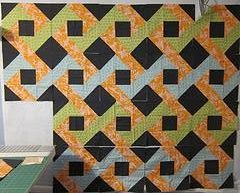
Photo courtesy of Heidi Elliott
Elements of a Design Wall
1. The Covering
The main function you need is to have your quilt fabric cling to the wall with little or no pins. This makes it easier for you to move your pieces around. One of the best fabrics for this is flannel. You can also use felt or low-loft batting. When attaching this to your backing remember to slightly stretch it over the backing and staple, tape or pin it to the back.
2. The Backing
Depending on your space available, budget or whether you need a portable wall, will dictate what you can use. I have listed a few suggestions below:
* Flannel backed tablecloth that you can roll up and store.
* None. Use a flannel sheet pinned to the wall.
* Roll up blind with flannel fabric attached using adhesive spray. Also portable as above.
* Cork board or hardwood that you can purchase from hardware stores or
lumber yards. Check whether they will cut it to size for you as well.
Walls made from these are easier to use when completed as they hold onto
the pieces of fabric as well as being able to be leaned against a wall
or a door.
If you choose to make your own then the major advantage is you can make it the size you want.
You can also purchase a professionally readymade one as well.
- Home
- Quilting Supplies
- Design Wall
Sign up for my newsletter below!
Like the page? Let me know! (click the button).
Love Quilts?
Come be social with me - click here!


Sign up for my newsletter below!
How there's so much free information on this site.
Sometimes I recommend a product(s) that I have used & loved when making my quilts etc. If you buy something through one of these links, I receive a small commission which allows me to design & make more quilts! There is no extra charge to you, and it helps keep my information/patterns free of charge. To learn more please see my affiliate disclosure document.
Recent Articles


-
Perth Quilt Tour 2019
Nov 08, 18 04:17 PM
May 19 to May 28 2019 – Time for a getaway Join the fully escorted tour and take in the sights and tastes of the Margaret River Valley, visit the Perth Craft & Quilt Show and plenty of other exciting…
-
Pattern available for the Conical Felt Tree!
Oct 13, 18 11:21 PM
The Conical Felt Tree pattern is now available. This is a fabulous Christmas tree to make for young children. They will decorate this tree over and over again! Suppliers of the thick felt & Velcro fab…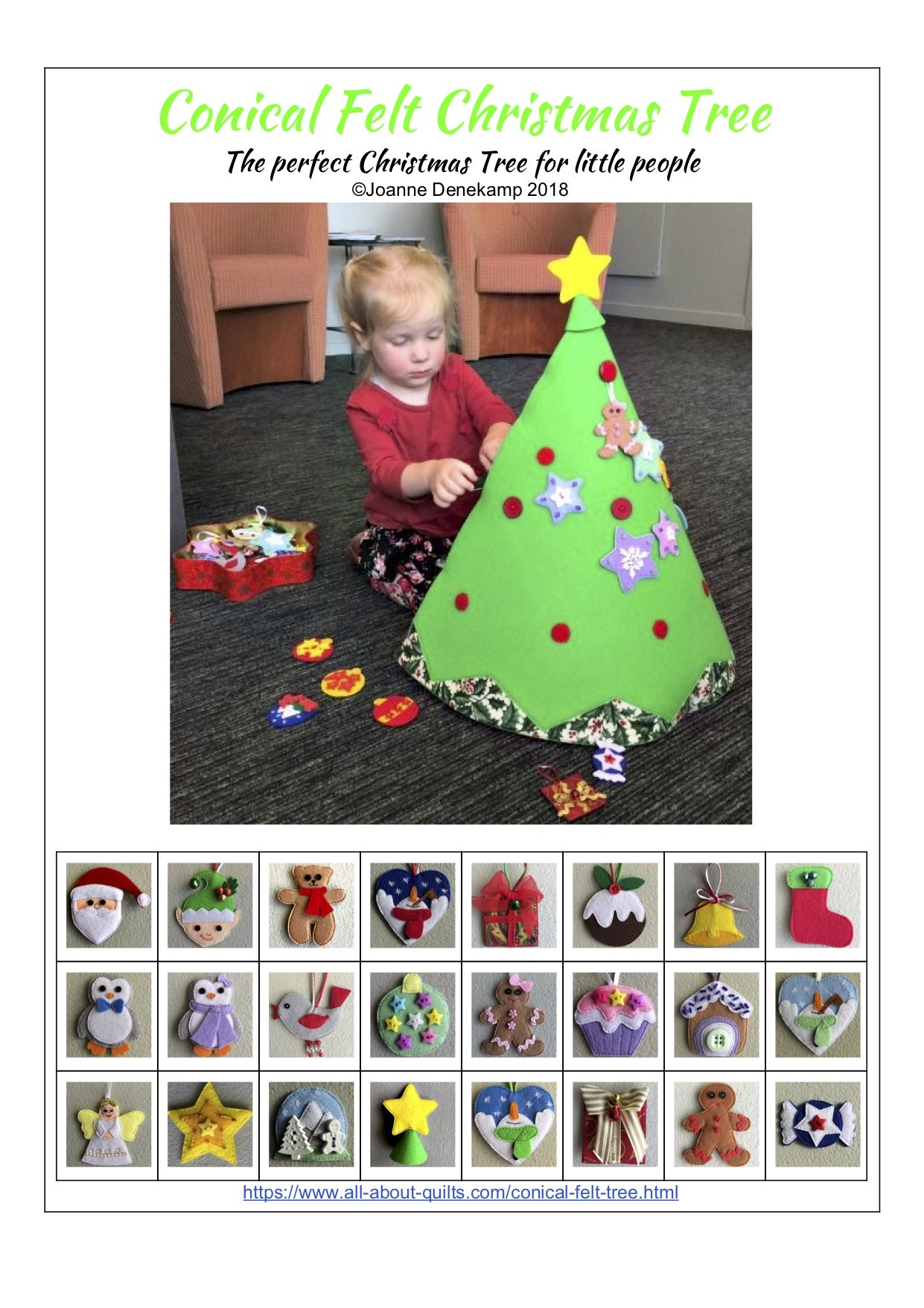
-
Conical Felt Christmas Tree
Oct 11, 18 09:00 PM
Cassie is having fun decorating her Christmas tree! The pattern will be available at the end of October 2018.
New! Comments
Have your say about what you just read! Leave me a comment in the box below.